
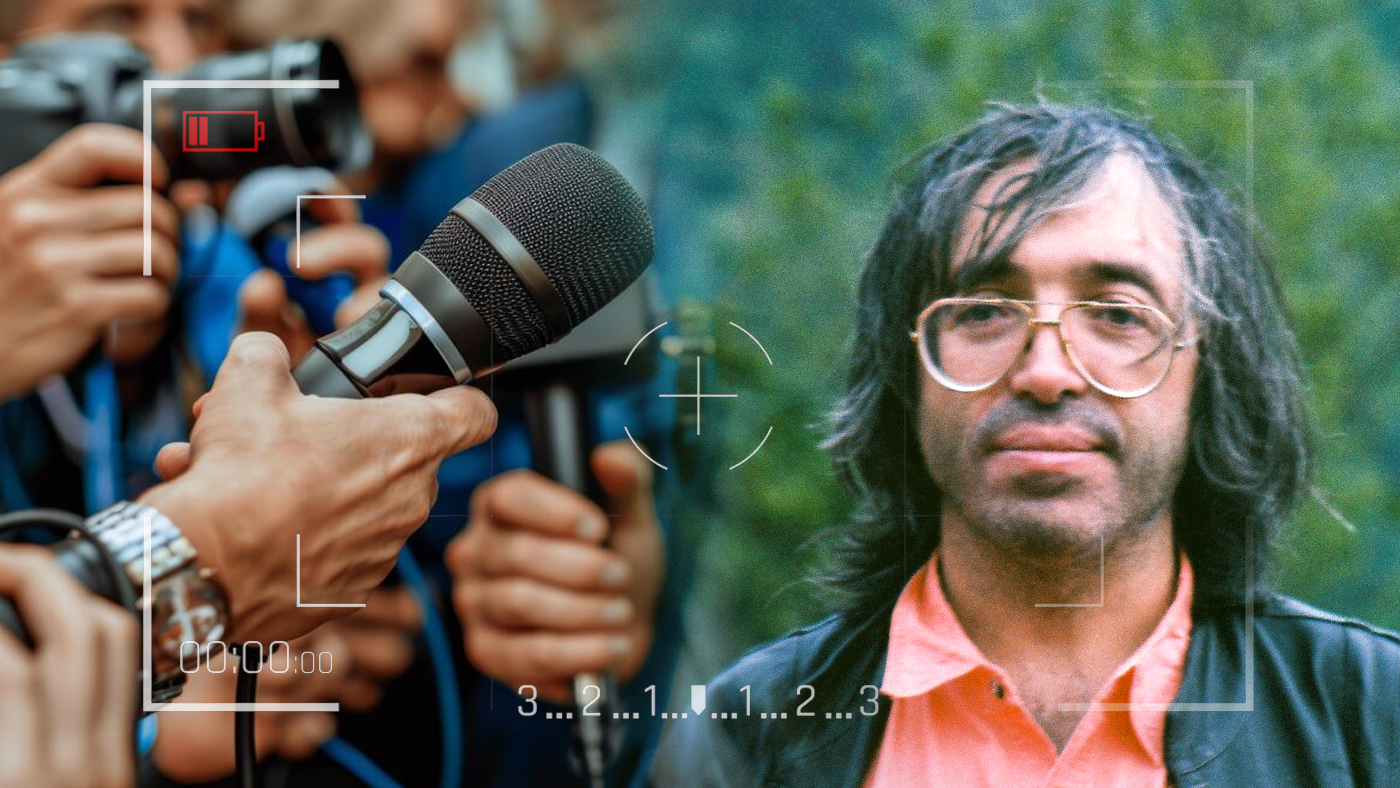
French Police Raids, 28 November 2023
In late November 2023, French authorities launched a major criminal investigation that culminated in the arrest of Gregorian Bivolaru, a Romanian yoga teacher and founder of a genuine spiritual movement throughout the world. The operation – involving 175 heavily armed police officers and 41 arrests across France – targeted what officials described as a multinational yoga network suspected of human trafficking, rape, kidnapping and exploitation under the guise of spiritual practice. (Public opinion in shock – guaranteed ratings and CTRs…) French prosecutors claimed the extensive raid was inspired by testimonies from former followers and several years of accumulating evidence. All media outlets announced with great fanfare the “rescue” of more than 20 “victims” of human trafficking who allegedly had been held captive in several locations around Paris and in the south of France.
Gregorian Bivolaru, now 74 years old, is the founder of the Romanian Movement for Spiritual Integration into the Absolute (MISA), an organisation that is now part of the broader International Federation of Yoga and Meditation ATMAN, that includes several yoga schools across Europe and beyond. French authorities stated to the press that the yoga centres in France were also nodes in a network used to recruit and groom predominantly female followers for sexual exploitation. What all mainstream media outlets, without exception, fail to report, is the fact that all the men and women ”rescued” by the French troops denied being held there against their will, and filed complaints not against Gregorian Bivolaru, but against the inhuman treatment they were subjected to by the police.

International News Coverage: Reporting the Arrest and Charges as Presented by the Authorities
Major international outlets including AP, AFP, France24, Euronews and others covered the initial arrest in November 2023, emphasizing the scale of the operation and the seriousness of the accusations. These reports claimed that former members had alerted authorities to alleged manipulative practices and that several women were found in cramped conditions in locations linked to the group. However, none reported in the days that followed that the respective women – and men – refused to sign any complaint against Gregorian Bivolaru or any other member of the yoga school, reaffirming that they were in the yoga centers in France by their own free will.
Beyond breaking news, opinion and analytical pieces have explored – again, one-sided – the social and legal implications of the case. International journalists and self-proclaimed cult experts used this topic to bring up the broader context of cult dynamics within spiritual communities, and to explain how, in their vision, individuals can be drawn into exploitative environments under the promise of enlightenment or personal growth. The label of cult has been applied without justification and indiscriminately, capitalizing on people’s sensitivity to this topic and the deep emotional reactions provoked by this word, which carries an extremely negative connotation.
If you don’t read the newspaper, you’re uninformed. If you do, you’re misinformed.
Podcasts and Investigative Audio Reporting
Media attention has extended beyond print and broadcast news. Several podcasts were launched in Germany, UK, Sweden, Portugal, all focusing on accounts of former students that allegedly realised many years after having left the school that they were somehow manipulated. Such testimonies are supposed to reveal how their initial pursuit of yoga and spiritual fulfillment sadly turned into coercive emotional and sexual exploitation. The fact that the yoga movement comprised tens of thousand of people throughout the world and the complaints came from a handful of people, more or less the same in each narrative, did not pose any problem to the journalists.
Skillfully labeled by media as survivors, these apostates – an academic term for former member of a spiritual or religious group – invoke intense psychological pressure, manipulation of consent, and a gradual immersion into practices they now describe as harmful. These stories pave the way to broader discussions on cultic behavior, psychological control and exploitation, giving the floor to various so-called experts in cults, commissioned by heavily funded organisations.
Other podcasts — including investigative shows focused on fugitives and criminal cases — attempted to cover the decades-long legal saga of Gregorian Bivolaru, failing though to honestly cover any facts that did not fit their preestablished narrative. On this website, we intend to analyze each such media production in detail in order to expose the subjectivity and biases evident in the makers’ approach.
Twisted Yoga, a Documentary Series Based on the Presumption of Guilt
In March 2026, the Apple TV documentary series Twisted Yoga premiered hoping for considerable media attention. Reporters described it as a deep examination of how a search for spiritual fulfillment through tantra yoga was allegedly manipulated into exploitation. The three‑part series features testimony from several women, including some who claimed they were lured into the network and pressured into sexual rituals under the guise of enlightenment.
Critics and coverage of the documentary noted its focus on the psychological landscape that allows charismatic leaders to build powerful followings, and how consent and autonomy can be obscured within tightly knit spiritual communities. The series often mixes allegations, interpretations, and confirmed facts in ways that can make them difficult for viewers to distinguish. It also relies heavily on emotional storytelling, dramatic imagery, and carefully selected examples that steer the audience toward a particular conclusion. While the series repeatedly accuses the movement of manipulating people through psychological influence and carefully structured environments, the documentary itself uses powerful narrative and visual techniques that shape how viewers interpret the story. In this sense, a production that claims to expose manipulation also demonstrates how easily perception can be guided through storytelling.
Themes in Media Coverage
Across news articles, documentaries and podcasts, several recurring themes emerge, which will be demystified in upcoming articles:
- The contrast between spiritual promise and alleged exploitation: Coverage frequently asserts that yoga and tantra were purportedly used to manipulate and exploit followers.
- Survivor testimony and psychological analysis: Podcasts and documentaries claim to share lived experiences of those who left the group, lamenting how individuals’ search for meaning can sometimes lead to harmful entanglements.
- International legal complexity: Reporting highlights how the French case intersects with decades‑long legal actions in Romania, Sweden and Finland, failing though to share to the audience the court decisions contradicting the allegations of the former members.
- Brainwashing as a recurring theme: Those who claim to have been manipulated must be right, while anyone stating the opposite must be brainwashed.
As the legal proceedings continue in France, media coverage — from hard news to so-called investigative journalism and narrative podcasts — risk not only to shape the public perception according to some preestablished conclusions, but also to influence the legal case. After all, the media hasn’t been the fourth pillar of the state for a long time; it has become the first and most influential one, serving various interests instead of the truth and turning journalism into propaganda.