
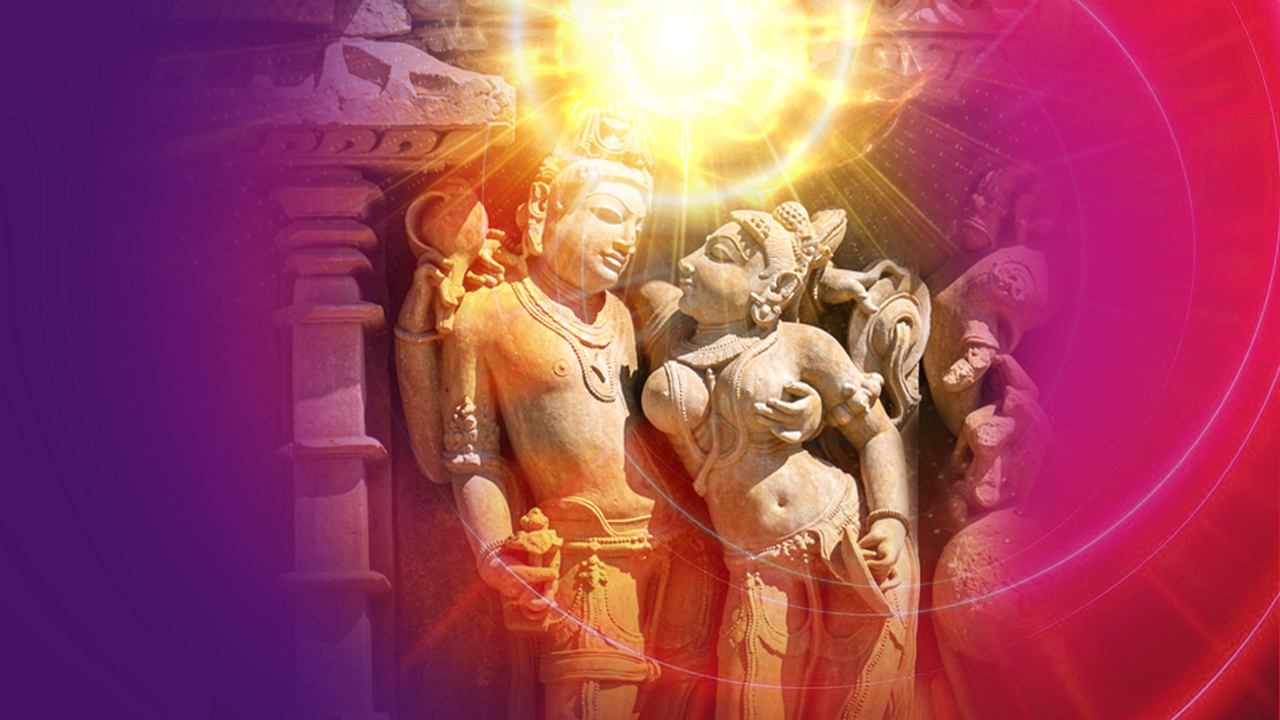
Massimo Introvigne’s Sacred Eroticism: Tantra and Eros within the Movement for Spiritual Integration into the Absolute (MISA) debunks certain clichés and stereotypes in the media
To any attentive and intelligent observer, it is already evident that MISA’s stance on eroticism and the revolutionary teachings it promotes in this regard are among the main reasons for the relentless attacks by the media and the harassment by the authorities. “Group sex,” “orgies,” “yoga porn,” “sexual abuse,” “pornography,” “sexual perversions,” “tantric octopus,” “sexual magic,” “sexual exploitation” through “brainwashing” – these are some of the most common clichés and stereotypes with which MISA is associated by the media and, consequently, by the public that “gets its information” from these sources. Unsubstantiated labels used obsessively, which instantly provoke an emotional reaction of rejection, arousing indignation and outrage, sometimes even hatred, and which block from the outset any attempt at dialogue based on common sense and relevant arguments. Classic manipulation techniques work here with almost mathematical precision.
The Italian professor and researcher Massimo Introvigne, an authority in the sociology of religions, is the first internationally renowned scholar to have studied in an objective and rigorous manner not only the history of MISA – with the abuses, discrimination, and persecution to which it has been and still is subjected – but also certain characteristic, indeed defining, of this esoteric school, including the fundamental revelations regarding Pure Eros or the mystery of the Godly Attributes. His exceptional work “Sacred Eroticism. Tantra and Eros in the Movement for Spiritual Integration into the Absolute (MISA)”, published in 2022 by Mimesis International, is the result of several years of research, which has also taken shape in other papers presented at international conferences, such as “MISA. An Overview” (CESNUR Congress 2016, Daejin University, Korea) or “Eroticism and the Visual Arts in MISA” (Krakow, 2016).
With great courage, Massimo Introvigne addresses some of the aspects considered “controversial” regarding the MISA School of Integral Esoteric Yoga, aspects which, through skillful misrepresentation and distortion by the media, have made it possible for massive abuses, flagrant violations of human rights, and the most basic principles of justice (even by “law enforcement”) to appear somehow justified, and for civil society to deliberately ignore them.

An Ancient and Universal Spiritual Path
One such example is Transfiguring Sacred Eroticism. Introvigne makes it clear from the outset that Sacred Eroticism is not an invention of MISA, but rather an ancient and universal spiritual path, referring, among other things, to Taoist teachings dating back 2,300 years. Western esotericism, too, had known practices related to sacred eroticism since the Middle Ages, but kept them secret or described them in a cryptic manner, due to the prevailing attitude of rejection toward eroticism, specific to Western culture.
Going deeper, the work highlights the fundamental differences between eroticism and raw sexuality, as synthesized and revealed by yoga teacher Gregorian Bivolaru – differences that are completely unknown to most people, including scientists. Despite this ignorance, arbitrarily and without any real basis, erotic practices with a profound spiritual dimension have been declared “dangerous” or “subversive” by authorities, condemned as “immoral” by public opinion, and have constituted a central element of the media’s manipulation of the public through sensationalist stories, to the point where the public turned a blind eye to the abuses – otherwise unimaginable in a democratic society – that took place against MISA or against other spiritual communities in the world. For although the central subject of this monograph is MISA, the stigmatization of spiritual movements or esoteric groups that incorporate Sacred Eroticism is a broader phenomenon, observed throughout the centuries all over the world.
The reader is warned right from the introduction that “whatever it may be called, sacred eroticism is rarely viewed favorably by the media.” On the contrary, the initial reaction of both traditional religions and the media to the presence of eroticism in the practices of a spiritual group is typically hostility toward that movement, its leader, and its members. And the erotic elements within those groups are almost always associated with alleged “sexual abuse” of which the group’s leaders are accused or with a supposed “deviation.”
A New Perspective on Life
To illustrate what Sacred Eroticism actually entails, the Italian sociologist analyzes both the initiatory principles of the teachings promoted by MISA and the evolution of modern concepts of Eros and eroticism, while also proposing, based on pertinent scientific arguments, to replace the vague, pejorative, and implicitly condemnatory label of “deviation” (applied by many researchers to groups promoting sacred eroticism) with that of “radical aesthetics.” Introvigne shows that the aesthetics of eroticism were radically redefined in the 1960s, based on three sources of influence that served as alternatives to the prevailing social currents: Eastern spirituality (particularly the Tantric tradition of India), Western esotericism, and modern art. “Drawing on Eastern spirituality, Western esotericism, and modernist art, the revolution of the 1960s constructed a radical aesthetic in which the boundaries between art, religion, everyday life, and eroticism began to collapse.”
This aesthetic revolution generated two reactionary counter-movements from two interested parties – with opposing perspectives, however – concerned with preserving these clear boundaries: the official church, which feared it would lose influence, and the defenders of secularism, concerned about the spiritual element that was thus emerging in art, culture, daily life, and eroticism.
The new perspective on life proposed by MISA is by no means limited to eroticism, but it certainly includes this element. Massimo Introvigne repeatedly emphasizes that MISA regards ordinary sexuality as inferior, as it generates a pleasure that, compared to pure erotic pleasure, is crude, primitive, and vulgar. Eroticism, on the other hand, involves a distinctly superior experience which, in its highest forms, brings about a veritable state of deification within the being and consciousness of the practitioners. This approach, Introvigne notes, is not an invention of MISA, as there are remarkable precedents in the universal history of sacred eroticism. Such sacred erotic practices, studied by researchers for decades within esoteric groups, sometimes require years of preparation, rigorous discipline, and profound esoteric knowledge; they are by no means a trivial diversion or curiosity, and even less can they be equated with alleged “abuses.”
In most democratic societies, there is a reasonable degree of religious freedom and a high degree of sexual freedom, but there is no real freedom to combine eroticism with spirituality.
Erotic Amorous Continence, A Fundamental Spiritual Practice
The Italian researcher also provides a detailed description of a fundamental esoteric practice through which the vast differences between eroticism and sexuality can be easily understood: erotic-amorous continence, an essential component of the spiritual teachings promoted by MISA. In this regard, he specifies that the esoteric basis of amorous erotic continence is the principle of the occult correspondence between the Macrocosm (the Universe) and the microcosm of the human being, demonstrating a sound understanding of this universal principle. Thus, the practice of sacred eroticism, which involves mutual love, complete erotic continence, and an exemplary mutual transfiguration (even adoration) between the two lovers, can gradually lead both the man and the woman to attain a state of complete deification and “macrocosmization” of their consciousness. Therefore, from MISA’s initiatic perspective, eroticism is never confused with sexuality, being incomparably more than mere sexual relations between men and women.
Stereotypical Arguments Used to Justify Abuse
Addressing the issue of the Romanian authorities’ constant harassment of MISA, Introvigne notes that they have made not even the slightest effort to understand how sacred eroticism is present in other spiritual or religious traditions, which are universally accepted and respected. Furthermore, these authorities have exploited—with the media’s complicity—the public’s ignorance and stereotypical “brainwashing” arguments to legitimize the abuses committed against both Gregorian Bivolaru and the esoteric spiritual school he founded. The author also revisits the brutal raids in March 2004 on the homes of some yogis, pointing out that this is a common practice, just as is the media’s participation in such staged events. In all similar cases analyzed, in countries considered democratic, the results of such raids in terms of identifying and punishing potential offenders are generally non-existent, but the media “spectacle” is effective in convincing the public of the vigilance of politicians who “protect” them from “sexual cults.”
Such groups labeled as “cults” are frequently the target of so-called “anti-cult” organizations, as recent events in France have also demonstrated. Introvigne further confirms that history shows us that, generally speaking, spiritual teachers who promoted the virtues of sacred eroticism were unpopular (to put it mildly) with the media, church representatives, authorities, and politicians alike:
…a line that, in most societies, should not be crossed is that religion [n.b. in this broad sense, the author also includes spiritual movements] and eroticism should not be presented in the same context. Although an active anti-cult movement, supported by some governments, would monitor you and likely denounce you, in a modern democratic society you can propose forms of religion that most would consider ‘strange’ and you would have no problems. If no minors are involved, you would also be allowed to run a profitable business with adult films and shows (in some countries, even a chain of brothels). What you will not be allowed to do, with rare exceptions, is to gather thousands of disciples, teach them erotic techniques, and proclaim that these – and even the films and shows that promote a certain form of eroticism – are part of a spiritual teaching. This is a taboo that still persists.
In this context, the author also mentions the private efforts of some MISA students to introduce elements of esoteric, transfiguring, and uplifting eroticism into the world of adult films and performances, in place of the degrading pornography and crude, loveless sexuality that predominate in today’s society. For, surprisingly, while pure eroticism is condemned, even anathematized, and while love, beauty, and transfiguration have nearly vanished from art, pornography and inferior or even deviant sexuality are openly promoted.
More Spiritual Revelations Covered
Introvigne complements his extensive analysis of Sacred Eroticism and the so-called “radical aesthetics” within MISA by addressing another esoteric aspect of major importance: the mystery of intense, full, profound, and continuous communion with the infinite, eternal, and gratuitous subtle and sublime energy of the Divine Attributes. In addition, the work also explores other topics, such as the controversial theme of “conspirituality” (a form of spirituality that includes the exposure of conspiracies existing on a planetary level) or the connection between Romania and Shambala. From the perspective of the themes analyzed, we can thus affirm that this comprehensive, pertinent, and carefully documented study on MISA heralds the imminence of major, even revolutionary, revelations of spiritual truths on a global scale.
As a conclusion to this brief presentation of Massimo Introvigne’s exceptional work – which we invite you to read with an open mind and curiosity – we might say that history shows us that bringing together eroticism and spirituality is a “mistake” that can cost you dearly. But let us not forget that history is still being written…