
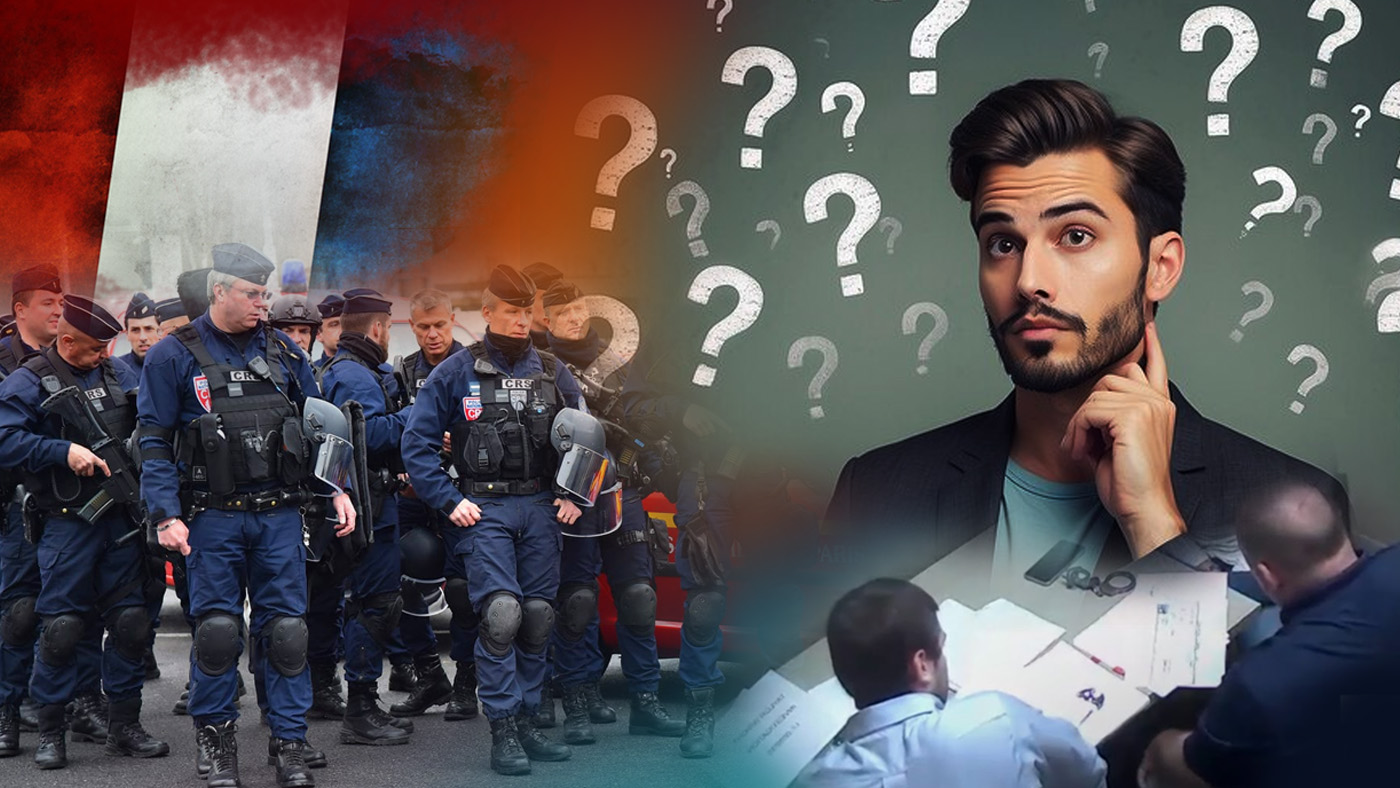
Well, they’re nowhere to be found, because in fact they never were
The days and weeks following the raids on 28 November 2023, the French, Romanian and international press, from New Zealand to China and Pakistan, were lamenting the poor so-called ”victims” kept almost in chains, if you were to listen to the journalists, by Gregorian Bivolaru and his iron men of the organised crime ”gang”, also called ”Tantric multinational” – at least some were more creative. A handful of French organisations with impressive acronyms, Miviludes, OCRVP, Caimades, “specialised” in “sectarian deviations” or “repression of violence against individuals” (but violence against the ”yellow vests” or whose who contested the compulsory vaccination was of no interest to any of them, don’t be fooled), they sent report after report and referred to the French authorities the “dramas” of women who had been ”kidnapped”, ”abducted”, ”trafficked”, ”subjected to sexual violence”, ”raped”, ”psychologically manipulated”, etc. As proof, during the concerted intervention of 175 police officers on 28 November at 6am, some 26 women were found in several houses near Paris and in the south of France and were thus ”released”. Quod erat demonstrandum.
The only problem with this logic is that, according to our information from POMSIEY (the Press Office of the MISA School of Integral Esoteric Yoga), none of the 26 so-called victims have complained that they were held by force, against their will, or that they were forced by anyone to do anything. What’s more, instead of jumping for joy at being “freed“, they complained about the degrading way they were treated by police and investigators. At 6am, at temperatures just above freezing, they were taken out of the house in pajamas and slippers, handcuffed and with their hands behind their backs! Some of the more level-headed policemen let them get dressed though. French gallantry… Equally gallant, the policemen made a point of remarking, when the women arrived at the station in their pajamas: ”See how well we treated you? We brought you here by bus!” How else could they have brought them, by bike, on the Tour de France?

No declaration signed, despite the police pressure
Arrived before the investigating bodies, the women were received by attentive and benevolent psychologists, who strove to explain to them, with or without acronyms, that they can rejoice, it’s a great day for them, they are free again (in the meantime their handcuffs had been removed, you may have understood). Surprise, none of the arrested women seems too happy. The discussion progresses, the “victims” are asked to sign some standard statements, so that the guilty ones can be identified, punished (impaled if necessary). Double surprise, the girls don’t want to sign, they ask to be left alone and insist that they are nobody’s victims. Brought to the end of her patience, one of them even bangs her fist on the table (an argument that transcends language barriers): she doesn’t want to sign anything, what’s so hard to understand? A few, the more emotional ones, gave up and signed something, but rather an “account of the facts” than a complaint against someone who did something to them…
The story doesn’t end there. The time has come for the cops to let them go. Those – few – who did sign something were taken to a kind of hotel where victims of human trafficking are usually housed. Those who didn’t comply, were left on the street – pardon me, dans la rue – dressed with what they managed to put on in a rush, without money and phones, which had been confiscated before the ”handcuffing” operation. Did the good cops care that they were leaving “victims” stranded, with nowhere to go, their homes sealed, no one to call, nothing to eat, no money in the pocket? How the poor women managed to find their way in the streets of Paris, and how some of them managed to get back to their homes, we will hopefully find out one day. What is certain is that, a few days after the police raids, their families still knew nothing about some of the women ”rescued”… Yes, it seems incredible, but these are the facts. And so far we only know a small part.
They took us to a room, a room in the basement, to keep us all, and literally we were trying to help each other and every person who went to the basement, they were looking to take off a vest or a coat or something they had on and give it to someone else who was still undressed and still standing in the cold… because we didn’t know how long it was going to take. The police didn’t tell us anything, we kept asking them if they had a warrant, why they came to us, what was going on, but they paid no attention to us. They were simply saying they are the judicial police, and that they’re right, and that they knew what they’re doing, and that everything is legal, and that we don’t have the right to call a lawyer, we cannot ask for any warrant, we don’t need to receive any kind of information...
An easy question, to give everyone a chance to win. Does anyone see any resemblance to the 2004 events in Romania?
(Other than the fact that Romania is a francophone country…)
- In both cases the supposed “victims” were brutalized by the (dis)order forces, kept on the ground half-dressed or half-undressed, depending on one’s personal view, with a gun to their heads (that’s what the French didn’t think of).
- In both cases the prosecutors tried to extract false incriminating statements from them, and unfortunately in 2004 some cases they actually succeeded;
- In both cases the media made a big fuss and drew cries of indignation from honest citizens who were moved by the fate of the poor women trafficked and exploited;
- In both cases the media did not think, or if they did, they did not dare to ask a common sense question: ”Where are the alleged victims? You just said that you dealt with “the biggest organised crime network since the Romanian Revolution.” There can’t be a “human trafficking network” with more “network” members than victims. Seriously now.
What about the ”organized gang” that allegedly abducted and abused women?
With the victims in France we’ve pretty much got it figured out. There was still the question of the members of the ”organised gang” that kidnapped and abducted women. Also from the international press, we have learned that 41 people were arrested on Tuesday 28 November as a result of a large-scale police operation. From Tuesday to Friday, when they were brought before the judges with a proposal for preventive arrest, only 15 were left. Out of those 15, 6 remained in custody. Of course, it’s equally unfair to the wrongfully arrested, whether it’s just one or 6 or 15. However, we can deduce, if we use logic and common sense, that the large-scale operation was not based on very solid evidence when they picked these people up and announced to the press that they had destroyed a “criminal network”. Who knows, maybe they expected the evidence to be provided by the ”victims” they were going to ”free from slavery”. Malchance, as they say in the Hexagon.
We already know, from direct experience, that there will always be people (disgruntled for who knows what, frustrated, motivated by some personal vendetta or simply hungry for attention and/or money) who will pose as victims or make false statements against whomever they need to. What does it matter if the facts happened 3 or 5 or 7 years ago, and you’ve only now realised you were a victim? The fabricated human trafficking case in Romania, which was trialed for 17 years (and ended with the acquittal, in two separate trials, of those wrongly accused) showed us clearly what people are capable of. That is why we are not surprised that former so-called victims in the old Romanian case try their chance once more. They didn’t get compensation for ”damages” then, but at least they got free publicity. And the press is giving them water to the mill, instead of asking them, for example, why they did not come forward when they were summoned before the court in Cluj [n.tr: city in Romania where of the court case was judged], with arguments and proof that they had been trafficked or abused, as they claimed, not just with tabloid stories.
In the meantime, we stand by those now wrongly accused and hope that the French justice system will also establish the absurdity of these accusations.
The article was originally published on MISA website.