
1. From Information to Shaping: The Structural Framework of Influence
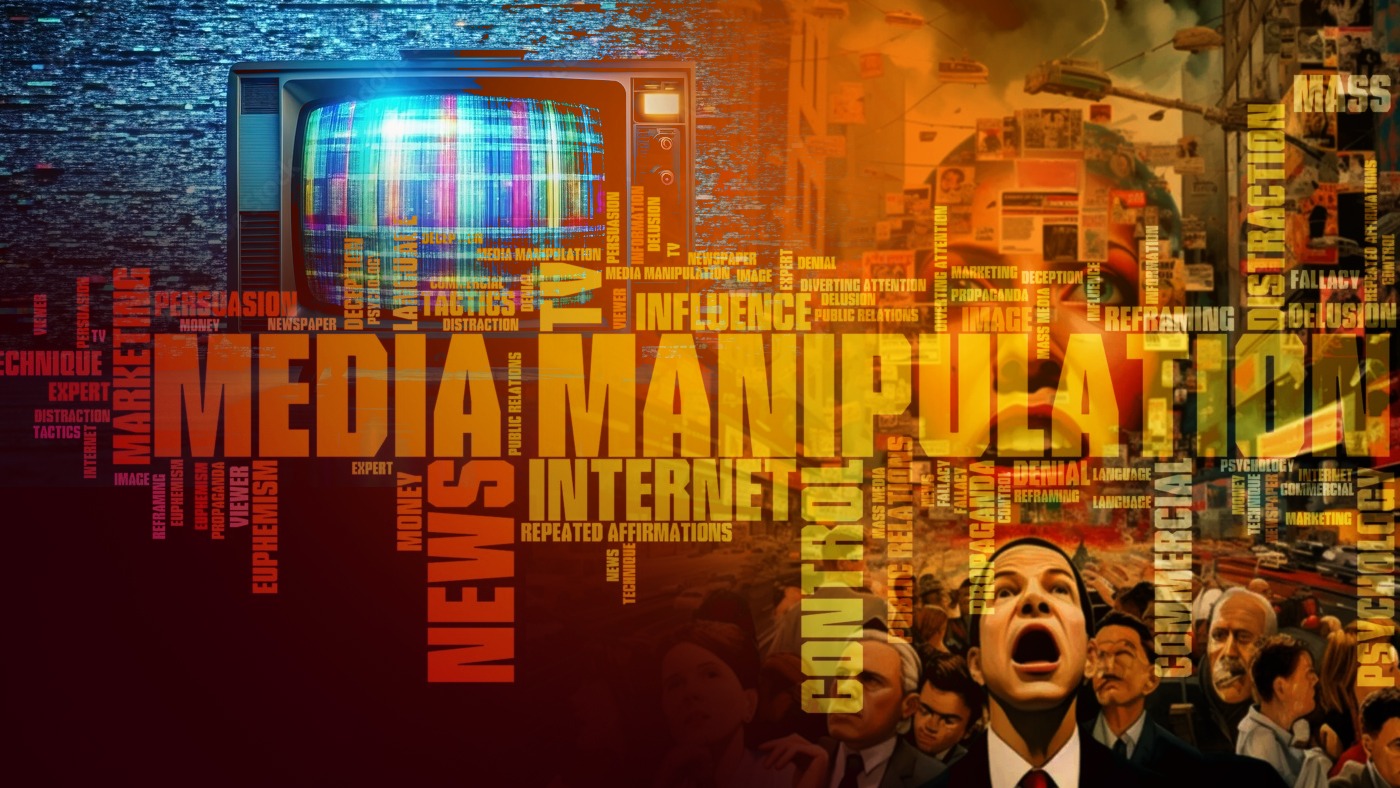
The premise that mass media functions exclusively as an instrument of information is, in light of extensive studies and research conducted over time, profoundly incomplete – and indeed false. The economic and political structure of media institutions – documented by organizations renowned for defending human rights and freedom of speech – indicates that the press operates within a system of constraints and incentives that favor influence over neutrality. Thus, periodic reports conducted across various countries by Reporters Without Borders (World Press Freedom Index – annual) and Freedom House (Freedom in the World Report) explicitly highlight the political and economic pressures placed upon mass media. These pressures lead, on the one hand, to the distortion of information and manipulation, and on the other, to the punishment of honest journalists.
According to additional studies on media influence, information is systematically filtered through multiple interests, advertising dependency, and privileged relationships with centers of power. For instance, in the study Manufacturing Consent (1988) by E. S. Herman and N. Chomsky, the “propaganda model” in mass media is described and explained in detail. Within this framework, media distortions are not exceptions, but predictable structural outcomes.
This infrastructure creates ideal conditions for the deployment of psychological influence strategies that operate not at the level of critical reasoning, but at the level of automatic cognitive processes.

2. Psychological Manipulation Strategies Used in Mass Media
2.1 Agenda-setting: Controlling Collective Attention
Agenda-setting theory demonstrates that one of the preferred methods of manipulation employed by mass media is indirect influence – control what enters the field of public attention, and influence follows. In cognitive terms, this mechanism exploits the limitations of human attention: individuals can process only a limited number of issues simultaneously.
By overexposing certain topics (often distorted or reinterpreted), media outlets create the perception that these topics are socially paramount. This is not mere editorial selection, but a form of relevance engineering.
The psychological effect at work here is the “availability heuristic” – people assess the importance of a phenomenon based on how frequently they encounter it. For example, if television networks discuss crime for several consecutive weeks (even if statistics do not indicate an increase), the public begins to believe that “we are living in an extremely dangerous period.”
Relevant studies supporting these conclusions include those by Maxwell McCombs & Donald Shaw (The Agenda-Setting Function of Mass Media – 1972) and Amos Tversky & Daniel Kahneman (Availability: A heuristic for judging frequency and probability – 1973).
They who have put out the people’s eyes, reproach them of their blindness.
2.2 Framing: Manipulating Interpretation
According to studies by Shanto Iyengar conducted in the 1980s–1990s (notably Is Anyone Responsible? How Television Frames Political Issues), the way information is presented decisively influences the conclusions drawn by the public.
This mechanism exploits the framing effect and the brain’s tendency to avoid cognitive effort. The same reality can be presented as either a “legitimate protest” or an “act of destabilization.” The difference is not merely semantic – it is cognitive and emotional.
For example, a report on rising unemployment was presented differently by two television networks: one claimed unemployment was increasing due to government policies, while the other argued it affected individuals who failed to adapt to the market. In the first frame, the public blamed the government; in the second, individuals were held responsible.
2.3 Priming: Recalibrating Evaluation Criteria
Priming operates by repeatedly activating certain themes, which later become criteria for evaluation.
For example, if media coverage emphasizes security, the public will evaluate leaders through the lens of security; if it emphasizes the economy, evaluations shift accordingly. The psychological mechanism involves activating associative memory networks, leading to automatic rather than deliberative judgments.
A relevant study demonstrating priming is that of Iyengar & Kinder (News That Matters: Television and American Opinion – 1987).
2.4 Exploiting Emotions (Fear, Anger, Outrage)
A study conducted by researchers Vosoughi, Roy & Aral at MIT (The spread of true and false news online – 2018) shows that emotionally charged information spreads more rapidly.
In this context, mass media systematically exploits fear (threats, crises), anger (conflict, blame), and moral outrage. The psychological mechanism involves activation of the amygdala (rapid emotional response), which diminishes critical and rational thinking. The result is a public that reacts rather than analyzes.
For instance, a headline such as “IMMINENT DANGER: Virus X spirals out of control” generates immediate reactions (panic, sharing), even if the information is exaggerated. Sounds familiar?
2.5 Confirmation Bias and “Information Bubbles”
According to analyses by Cass Sunstein, a professor at Harvard University (#Republic: Divided Democracy in the Age of Social Media – 2017), individuals tend to seek information that confirms their existing beliefs.
Mass media – especially online – capitalizes on this by providing ideologically segmented content, thereby creating closed informational ecosystems. The resulting effect is deeply harmful: radicalization and the breakdown of dialogue.
For example, a user who believes that yoga is incompatible with Christian faith will receive similar recommendations from social media platforms (Facebook, TikTok, YouTube, etc.), ultimately entering an ecosystem where all information reinforces this distorted belief.
2.6 Strategic Omission (Manipulation by Silence)
One of the most effective techniques is not necessarily falsehood, but the absence of information.
Cases such as Iraq War media coverage, analyzed by FAIR (Fairness & Accuracy in Reporting), demonstrate that lack of verification and the exclusion of critical voices can produce effects comparable to explicit propaganda.
In its analysis, FAIR strongly criticizes American media for offering almost no platform to experts who questioned the existence of Iraq’s weapons of mass destruction prior to the war, resulting in a one-sided narrative presented to the public.
3. From Mechanism to Behavior: How Populations Are Influenced
These strategies do not remain theoretical – they produce measurable behavioral changes.
3.1 Distortion of Perceived Reality
The public does not react to reality itself, but to its mediated representation. The predictable result is the overestimation of certain risks and the neglect of others.
3.2 Social Polarization and Fragmentation
According to analyses by the Pew Research Center, selective exposure combined with framing leads to parallel informational societies.
These analyses show how two groups consuming different media sources can develop completely opposing perceptions of the same political reality.
3.3 Influence on Electoral Behavior
Empirical studies indicate that media can influence voter turnout (mobilizing or demobilizing voters) and alter electoral preferences.
This is not merely influence – it is intervention in the democratic process.
A relevant study in this regard is that of Paul F. Lazarsfeld, Bernard Berelson and Hazel Gaudet (The People’s Choice – How the Voter Makes Up His Mind in a Presidential Campaign).
3.4 Declining Trust and Social Cynicism
Edelman analyses (Edelman Trust Barometer) indicate a steady decline in trust in media.
Paradoxically, media remains highly influential while being perceived as lacking credibility – resulting in cynicism and civic apathy.
3.5 Increased Vulnerability to Manipulation
Repeated exposure to distorted content normalizes manipulation and reduces the ability to detect false or altered information.
4. The Amplifying Context: The Digital Environment
Studies conducted by the Oxford Internet Institute (Computational Propaganda) show that the digital environment not only reproduces these mechanisms but amplifies them.
Algorithms prioritize engagement over truth, favoring emotional and polarizing content. The result is accelerated misinformation and rapid radicalization.
5. Conclusion: A Systemic, Not Accidental, Problem
Mass media is not merely a channel for transmitting information, but an active agent in shaping social reality through well-documented psychological mechanisms.
These mechanisms:
- exploit the cognitive limitations of individuals;
- influence perceptions and behaviors;
- can alter democratic processes.
In this context, the issue is not the existence of isolated deviations, but the systemic nature of influence. Without a critical (and constructive) understanding of these mechanisms, the public remains exposed not only to misinformation, but to a subtle and persistent form of reality-shaping – in other words, manipulation without scruples.