
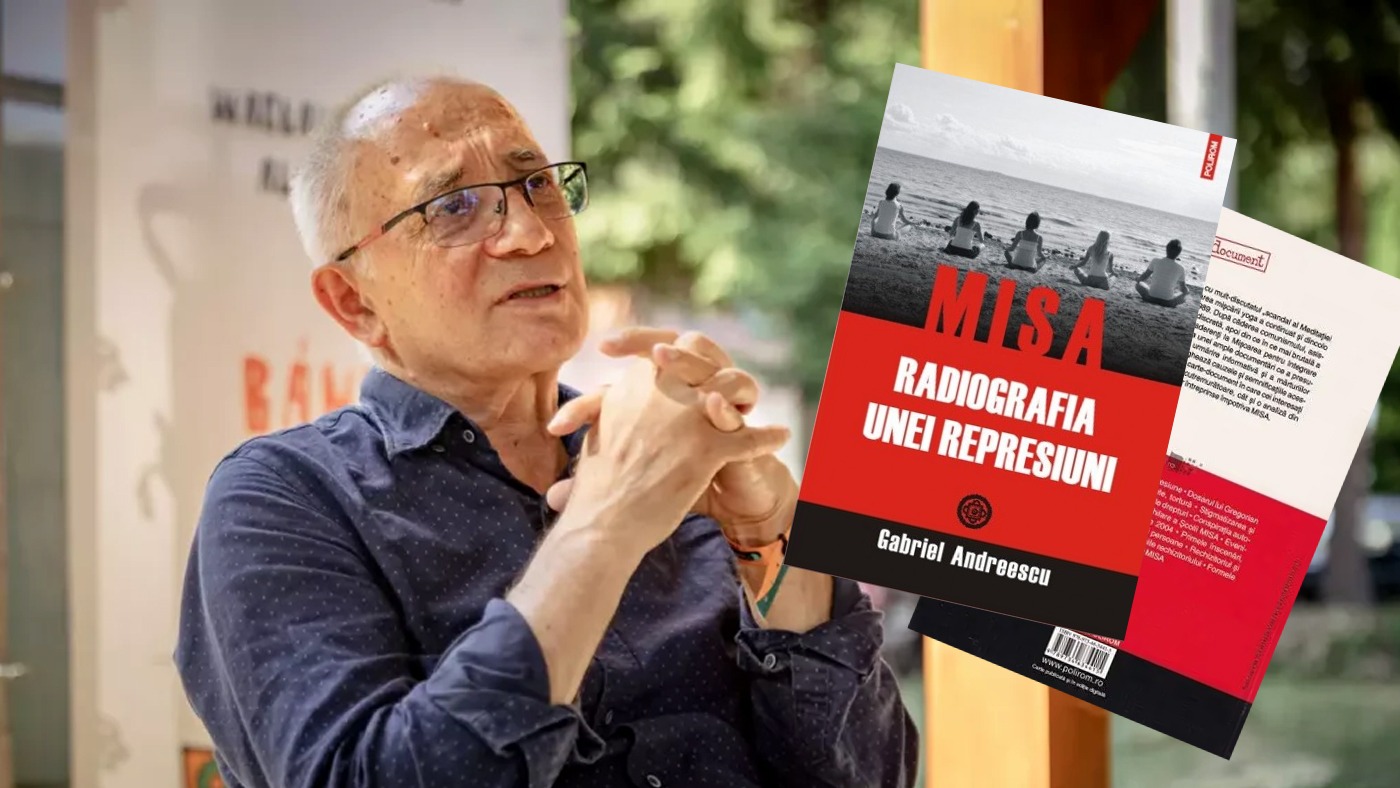
Full paper available in English on the website Noua Revista de Drepturilor Omului (New Journal of Human Rights), no. 3/2024.
Introduction
The study makes an assessment of the repression of some spiritual and religious movements that practice sacred eroticism. I borrowed the term “sacred eroticism” from a book by Massimo Introvigne published in 2022 [Sacred Eroticism: Tantra and Eros in the Movement for Spiritual Integration Into the Absolute (MISA), Mimesis International, Milano and Udine, 2022]. An important resource for the analysis were the investigations of the Center for the Study on New Religions (CESNUR), among which the contribution of Introvigne and his collaborators stands out. This text capitalizes on the research I have done on the “case” of the Movement for Spiritual Integration into the Absolute (MISA) over about two decades. In analyzing and interpreting the repression to which the followers of sacred eroticism were subjected, I consider the political and institutional framework of the events, but the emphasis was placed on the violation of fundamental rights and freedoms guaranteed by national legislation and international human rights law. The study evolves from a presentation of the attacks against communities practicing sacred eroticism in Romania, the Czech Republic, Italy, Argentina, France, to the doctrinal arguments that highlight the denial of the rights of discerning adults, the discrimination and the cruel actions to which the followers of sacred eroticism have been subjected.
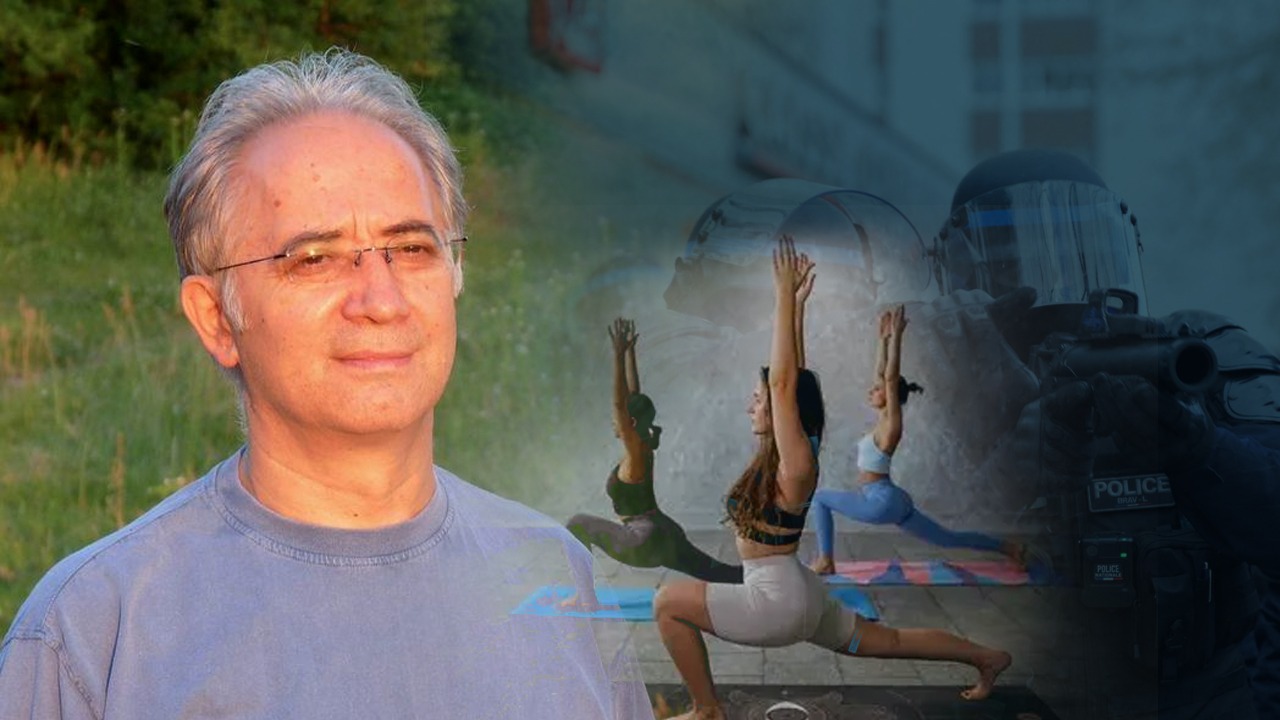
Chapters in this paper
- CESNUR panel on militarized raids and the resurgence of the brainwashing theory
- Police actions in Romania, Italy, Czech Republic, Argentina and France against groups practicing sacred eroticism
- Police repression assisted by the press. Brutality reaching the level of inhuman and degrading treatments
- Is suspicion towards new religious movements by state authorities legitimate? The special case of child protection
- Mental manipulation, brainwashing, ideas differing from the social consensus
- PACE resolutions on “illegal activities of sects” and their teachings
- Marginalizing the issue of discrimination against people who practice sacred eroticism
- Conclusions. The two authorities. The collective mobilization of cruelty, contempt and hypocrisy
Police actions against “sacred eroticism” groups have been documented by researchers, described in detail by witnesses, and summarized by some courts. They follow a strikingly similar pattern, a pattern that raises the question whether the repressive scenarios were inspired by others. Today, as a result of parallel investigations, there is no doubt whatsoever as to how the facts unfolded in all five cases [n.b. analyzed in this study].
Excerpt from chapter 8
The police action in France on November 28, 2023, is related to the efforts of medical researcher Hugues Gascan from the University of Angers. After he had written a number of articles with his colleague P.J., divergences arose between the two. Gascan claimed that P.J.’s discernment was impaired by her participation in a „cult” led by a tantric yoga teacher. The conflict led to the closure of the research center where Gascan and P.J. had worked, the latter filed a lawsuit against Gascan, and he was sentenced in 2013 to four months of prison, suspended.
Researcher Willy Fautré credits Gascan’s conviction as the reason why the latter declared war on cults. In 2022 he created a small Groupe d’étude du phénomène sectaire, which told the press that it had investigated the activities in France of the MISA Yoga School. In 2023, it claimed to have provided testimonies and documents to the anti-cult agency MIVILUDES proving that several women were held captive in France to be sexually abused by the MISA leader Gregorian Bivolaru. MIVILUDES transferred the materials to the Cellule d’assistance et d’intervention en matière de dérives sectaires (Caimades) and the head of the Office central pour la répression des violences aux personnes. These staged the 2023 police raids on eight separate houses and apartments in and around Paris, as well as in Nice.
Willy Fautré compared the scale of the assault on the ashrams in Paris and Nice on November 23, 2023, to another action by the French security forces: ”For comparison, in late August 2024, the French anti-terrorism prosecutor’s office engaged about 200 police officers [175 were involved in the assault against the ashrams] to hunt a suspect who had tried to set a synagogue ablaze in the southern French city of la Grande-Motte and caused an explosion wounding a police officer and destroying several cars nearby.
The November 2023 raids were not an operation against a terrorist or armed group or a drug cartel. It was a raid targeting eight private places mainly used by peaceful Romanian yoga practitioners”.
Willy Fautré finds that two phenomena have marked the relations between the communities that practice sacred eroticism, the authorities and the public opinion where these groups live. The hunt for yogis from BAYS, the Path of Guru Jára, Atman Federation and MISA was triggered by personal frustrations, by interests or vengeful impulses dressed up by the perpetrators and the law enforcement agencies in the hypocritical language of caring for vulnerable people. The hypocrisy of the authorities was exposed by the unjustifiable, disproportionate use of extreme force against people who were believers in nonviolence, were integrated into society, and didn’t have the means to oppose aggression. In all cases, before the forceful intervention and the investigations, the authorities had these communities under surveillance for a long time. They knew the pointlessness of military actions. And yet, they resorted to means more suitable for the capture of terrorist groups, or of networks of arms and drug traffickers. They insisted on calling in the TV networks to spread the images in a kind of show of glorification of the fighters trained to fight against organized crime. The compromising accusations, the excess and the publication of personal data were obviously illegal. The easy “capture” of people who lived peacefully, the public display of brutality seem to have produced satisfaction in both the decision-makers and public opinion. In all the situations analyzed here, the law enforcement agencies seem to have felt that they can unleash themselves without self-restraint. They seem to have been sure that they can act with absolute impunity.
The attacks of the security forces against the followers of sacred eroticism in Romania, the Czech Republic, Italy, Argentina, France have displayed a combination of cruelty and hypocrisy. They have also demonstrated the vulnerability of the human rights protection system in democracies that appear to be consolidated. None of the persons involved in the abuses, in a decision-making or execution position, was found guilty. The Romanian state was ordered by the European Court of Human Rights to pay hundreds of thousands of euros to victims of the brutal and unmotivated attacks. Another 2 million euros had to be paid by the Romanian taxpayer for the vast operation against members of the MISA Yoga School, whose only outcome was the conviction of the MISA leader on charges of having had intimate relations with a girl who denies them, and who was also past the age of consent.
The repression of the practitioners of sacred eroticism goes beyond the purely legal aspects. It raises the issue of the quality of our civilization, because the attitude towards cruelty and hypocrisy are the foundation of modern societies. In the long term, a cultural mobilization is also needed so that what happened in Romania, the Czech Republic, Italy, Argentina and France is understood in its profound significance. At this moment, however, the battle for justice is being fought in France, where trials related to the assault on the ashrams in Paris and Nice on November 23, 2023, are underway. It is absolutely necessary hat the actions of the French state against yogis are accompanied by lawsuits brought by the victims against the perpetrators, institutional and individual, of the repressive actions.
Gabriel Andreescu (born April 8, 1952, in Buzau, Romania) is a human rights activist and political scientist, one of the few Romanian dissidents who openly opposed Ceausescu and the Communist regime in Romania. He is a professor, and an active member of several Romanian human rights organizations. He is also a contributor to cultural magazines, writing and lecturing on topics such as multiculturalism, national minorities, religious freedom and secularism, the ethics and politics of memory and others. He is the editor of the Romanian-language New Journal of Human Rights (Noua Revista de Drepturile Omului, formerly Revista Romana de Drepturile Omului).
Andreescu conducted the most in-depth study of the suppression of the yoga movement in Romania during the communist era and, subsequently, of the abuses committed by post-communist authorities against Gregorian Bivolaru and the MISA yoga school. He authored two books on the subject, Reprimarea mișcării yoga în anii ’80 (The Repression of the Yoga Movement in Romania), Ed. Polirom, 2008, and MISA. Radiografia unei represiuni (MISA. An Analysis of Repression), Ed. Polirom, 2013.